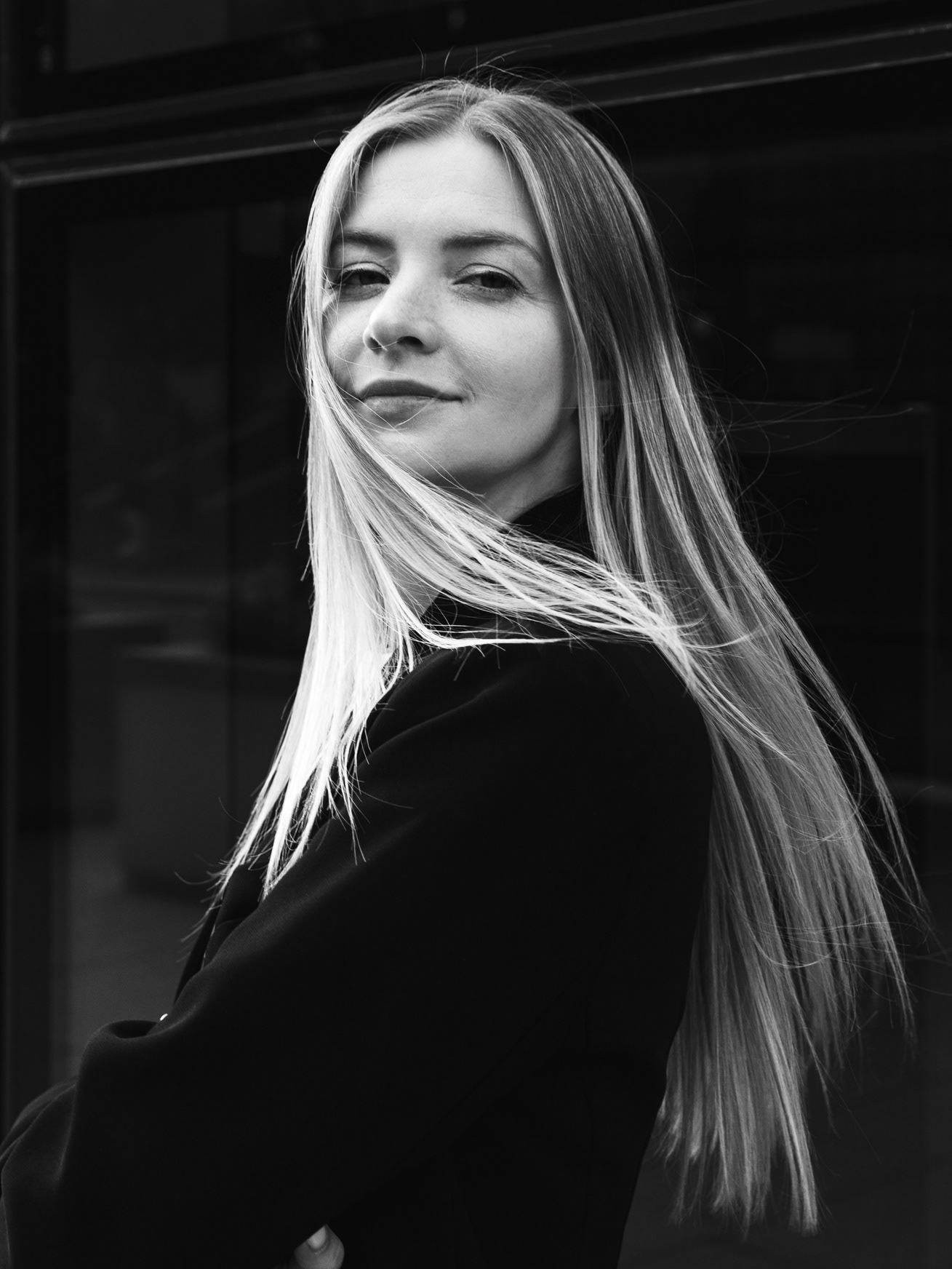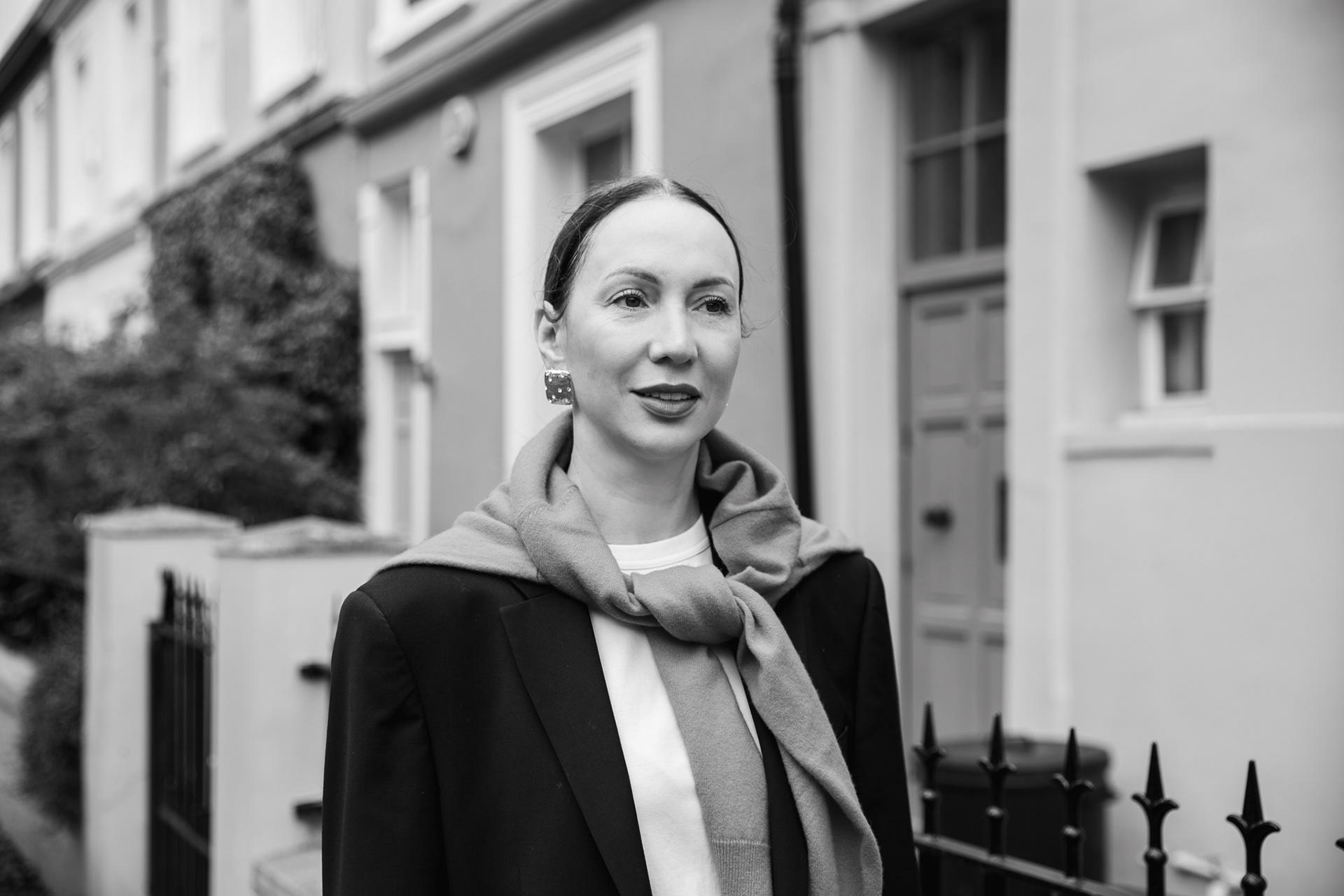
The Donetsk ‘Prince’ and the Fragile Gold of Peace
Her story is a chronicle of two lives, each ending in a total reset. In 2014, Kateryna was the embodiment of success: a bank manager in Donetsk, a young woman newly married to her ‘prince’. Their partnership seemed invincible. Her husband, Serhiy, was building a coal processing plant; they had just bought a house and proudly moved in their first pieces of equipment. Life was mapped out years in advance—stable, affluent, and predictable.
"We had only just bought the house. Everything was good—probably the best it could be in your early thirties. And then 2014 happened. You realise that most of the people living around you, people you knew, were 'waiters' [waiting for the Russian occupation]. It was a shock. Everything crumbled: friends, connections, even the relationship with my brother in Moscow. We simply ended up on opposite poles of the universe."
Kateryna recalls how they left for Crimea to ‘wait it out’—no luggage, just ‘in their shorts’. Her youngest daughter was only two months old. Kateryna believed so strongly in their return that she didn't even take her jewellery.
"I didn't even take my gold. We were walking along the promenade in Crimea, and every second person there was from Donetsk. People had been sitting there since April and couldn't bear the sight of Crimea anymore. Then the calls started: searches in my flat, criminal cases opened against me. I realised: there was no going back."
The decision was spontaneous but radical—to strip everything possible from Donetsk so that nothing would fall to the occupying authorities. While Kateryna was in Crimea, she remotely managed the ‘dismantling’ of her life.
"We started cutting everything out: air conditioners, doors... we even wanted the toilets, but we left those. The flat had been renovated just two years prior. I knew some 'minister' would walk in there the next day, so we moved the furniture into the car park. When they broke in with 'warrants' the next morning, they walked into bare walls. It was our small, but significant, victory."
Kyiv: Five Per Cent Oxygen
Kyiv met them harshly. Kateryna continued to work in the bank, but the financial system was collapsing: borrowers weren't repaying loans, and depositors were demanding their money. She weighed 57kg—exhausted, drained by stress and the first months of motherhood.
"The state wasn't waiting for us. In '22, Europe welcomed Ukrainians differently, but in '14 in Kyiv, adverts said: 'No rentals for those from Donetsk or Luhansk.' I would go to landlords and say, 'I’m from Donetsk, I won’t lie to you, but I promise to be decent.' People scammed us out of money; our car windows were smashed because of the Donetsk number plates. It was humiliating, but we started again from a blank slate."
When the bank finally collapsed, Kateryna and her husband were left jobless. There were thoughts of Moscow, but her internal compass wouldn't allow it. They stayed in Kyiv. Over eight years, the couple built a new empire: a chain of sushi and pizza restaurants and a real estate business. Kateryna bought flats, renovated them, and sold them on. They bought a house in Koncha-Zaspa; their son, Yehor, was born. Nannies, a driver, a dog—the level of comfort returned and even surpassed what they had in Donetsk.
"We got back to the same level. Every weekend—barbecues, friends. We had completely adapted. I didn't want to change a thing; we weren't even looking towards emigration."
The Morning the Sky Fell a Second Time
On 23 February 2022, Kateryna was planning a trip to the sauna, ignoring the warnings of friends. But the experience of 2014 sat deep in her subconscious. The car's tank was full, money had been partially transferred abroad, and an emergency bag was ready.
"That night, I saw Zelenskyy’s eyes on the TV—they were darting. I said, 'Serhiy, something is going to start in the morning.' At five a.m., I saw a missile. It flew right past my windows. My eldest daughter, Sonia, had a total regression—she sat on the stairs biting her nails to the quick. She remembered Donetsk. We grabbed the nanny and the children and drove into the unknown."
The journey was filled with horror. Kateryna still sees the image of a motorcyclist who crashed in front of their car in a convoy that couldn't stop.
"We were driving four lanes deep, fast. He flew under a lorry; his body flew right in front of us. We didn't stop—the flow carried us forward. That’s when I realised: we are like animals. We have only one instinct—to save our own."
European Transit: Vienna and Dorset
The family ended up in Vienna staying with an acquaintance. A three-bedroom flat in the forest seemed like paradise, but Kateryna, a ‘woman of action’, couldn't just sit still.
"I have a PhD, but in Austria, they would have told me to mop floors for three years while I learned the language. I realised: the war will end, and I’ll be left with bad German and no future. I opened visas for everywhere—America, Australia, Britain. I needed an English-speaking country."
That is how they came to Britain under the sponsorship scheme. They were taken in by a family in Dorset—a former policeman and an airline worker. Kateryna, accustomed to her privacy, found herself in a shared kitchen.
"I was in a state, hysterical. But Heather, our sponsor, was incredible. We arrived in a massive Lexus with heaps of belongings, and she just said, 'Help yourself.' We lived at the same table for three months. They showed us a Britain where people don't pry into your soul, but will always support you."
However, in Dorset, 15-year-old Sonia began to fade. A girl who was a candidate for Master of Sports in gymnastics couldn't live in a ‘village among meadows’. The family packed their bags again and moved to London.
London: Stickers, Property, and a Fourth Child
London met Kateryna with GCSEs for her daughter and a job hunt. She found work as an Operations Director at an elite dermatology clinic on Harley Street.
"My boss was 'old school'. Pedantic, irritable, insisting on insignificant clerical trifles. I, a business owner, had to listen and obey. But there was no way out because I needed to 'polish' my English. I organised a conference for 170 doctors. It was my personal challenge—to survive as an employee."
In tandem with work, Kateryna continued her real estate business—now in Dubai. She sold flats in Kyiv and bought there, building financial security for the family. In the midst of this chaos—moving, disputes with lawyers, and buying a flat in London—she found out she was pregnant for the fourth time.
"I gave birth to Maryana at 43. I worked until the very last day—I went on maternity leave on 12 January and gave birth on the 20th. A week later, I was back behind the wheel, taking the kids to school. In Britain, people give birth after forty; it’s the norm here. Medicine here is functional: if you’re healthy, they don’t interfere; if it’s critical, they save you."
The Price of Choice: Anger and Silence
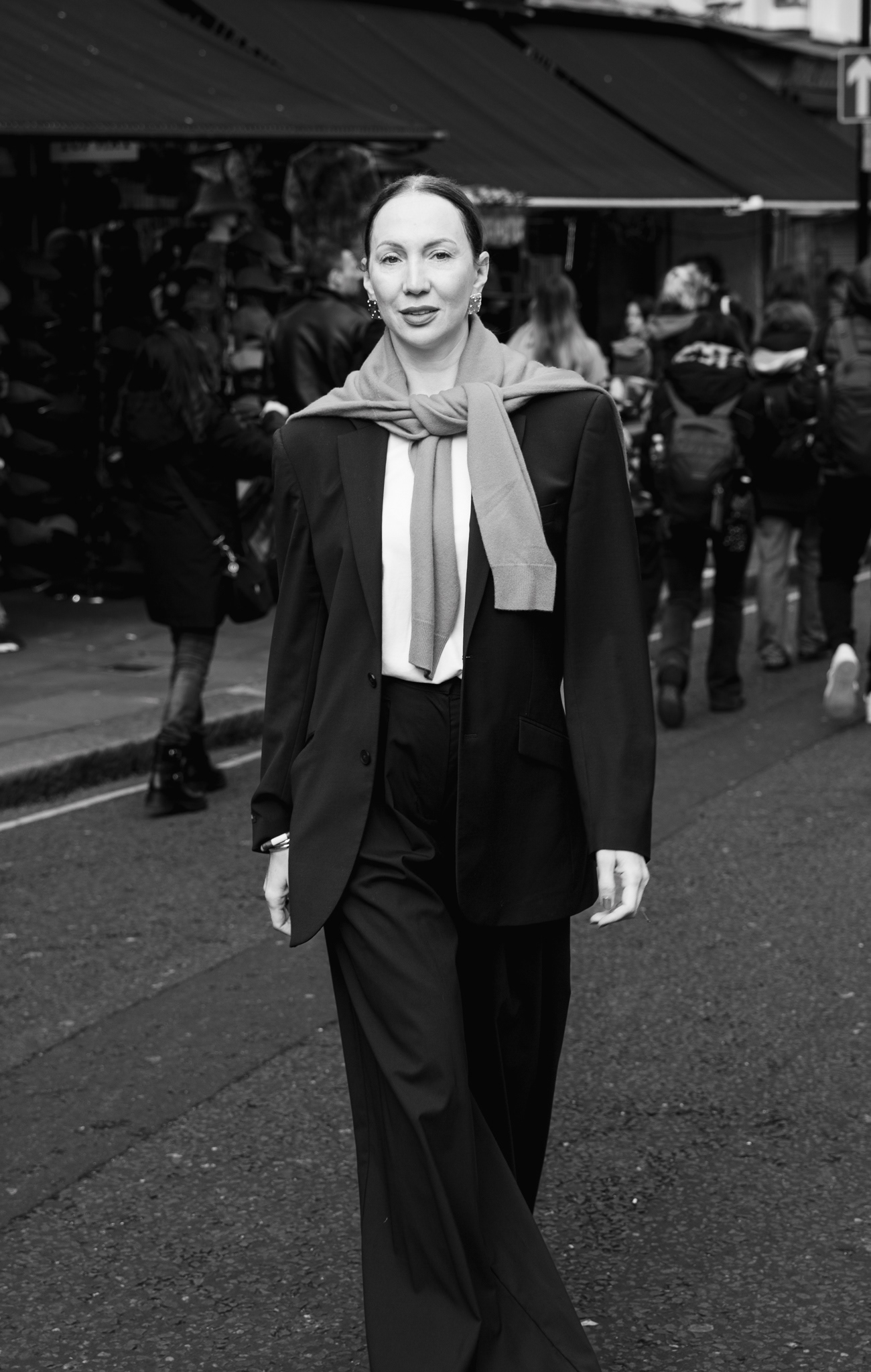
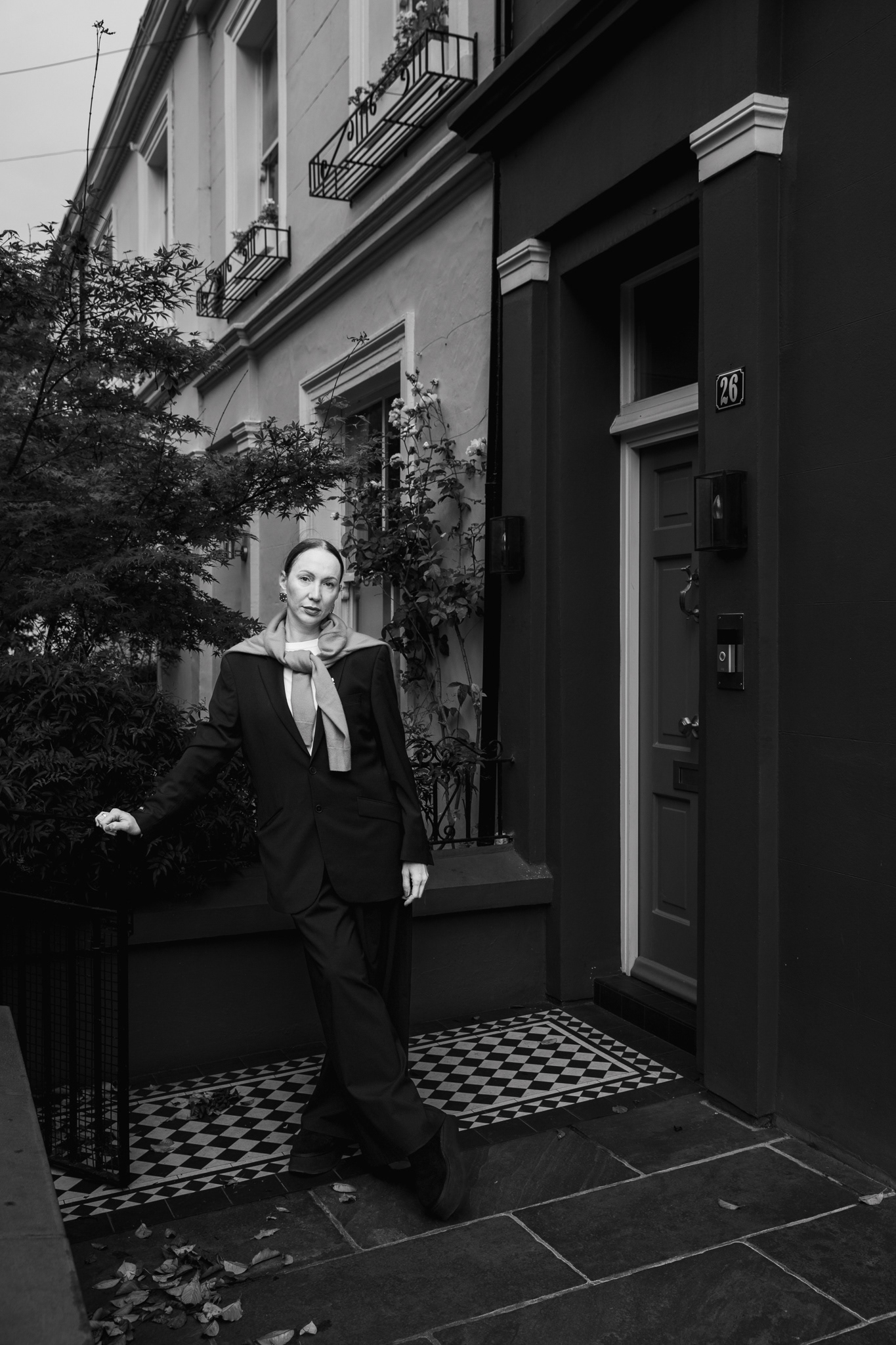
Today, Kateryna lives in Richmond. She speaks honestly about ‘deals with her conscience’. She finds it hard to listen to the Russian music she once loved or to watch old films. Her old life has been severed, and the new one requires colossal effort.
"My hatred is something I can't cope with. When I see Russians on the beaches in Dubai, I see pilots and snipers. I despise parents in Kharkiv who don't take their children away from the shelling, because to me, nothing is more valuable than a child’s life. It is my choice to be here. It’s hard for me; my husband works as a construction manager, though he was a plant director. It’s painful, but we are alive."
Serhiy remains her anchor. A man who never falls into depression and always says: "You did everything right."
"I go to the mirror, call myself a 'fool', and keep going. I make the decisions and I take responsibility for them. My strength is in movement. In the morning, I’m in the news of Pokrovsk and Kyiv, where my home is; in the afternoon, I’m in London with the children; and in the evening, I’m on Dubai business. I don't have the right to crumble, because behind me are four children, and they are my only real Las Vegas."