Breakfast in a Burst Bubble
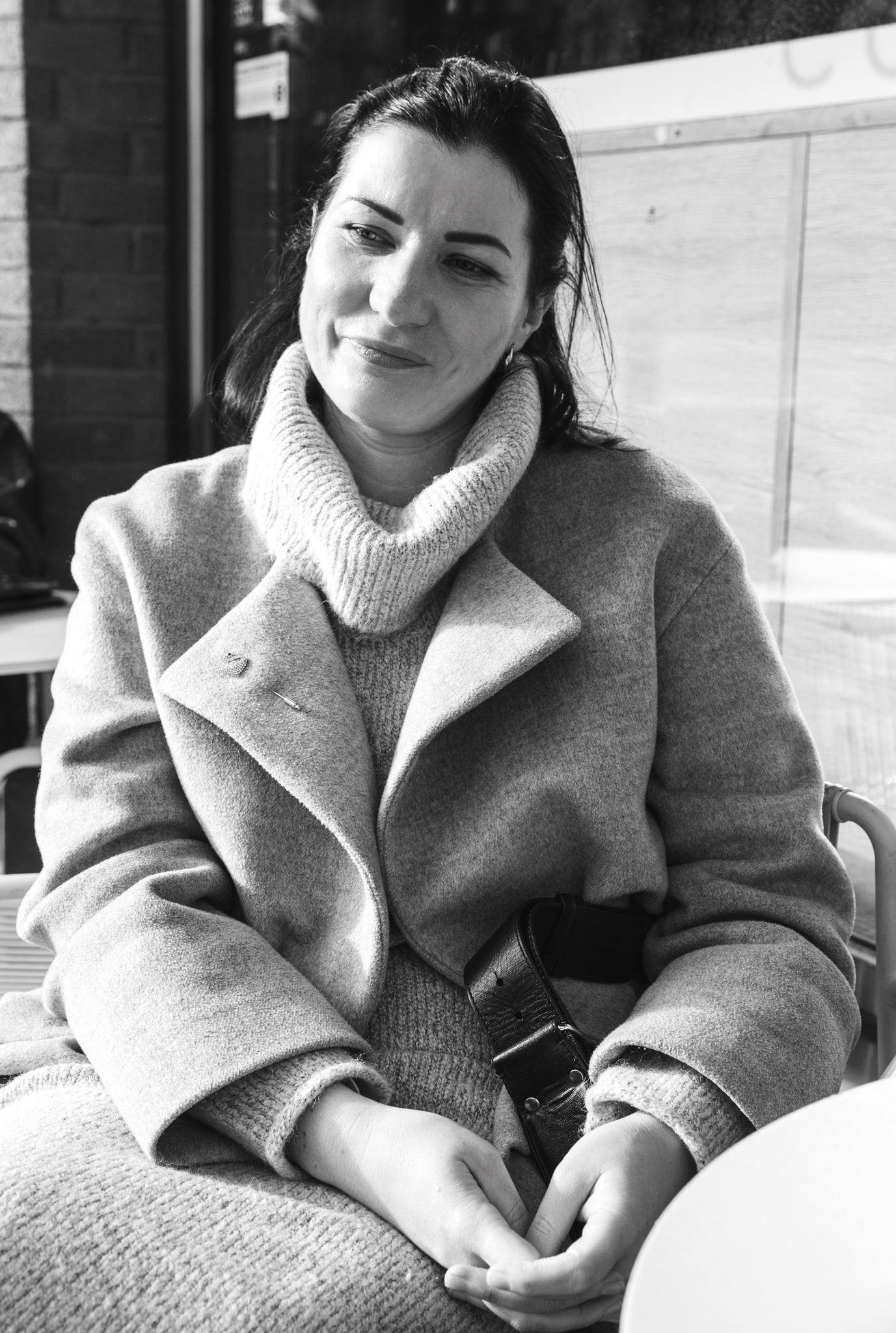
Until 24 February 2022, Anastasiia Shkuro’s life in Oleshky was a perfect balance of career and family. It was her "commuter town" for Kherson—just 15 minutes across the bridge and she was at work in a dental clinic.
She was making plans for the spring, raising her son, and felt entirely safe.
"I spent my whole life building a 'bubble': people I trust, stability. My brain blocked out the danger. The night before, I even had a row with my mother-in-law because she was worried about the news, and I kept telling her: 'Everything will be fine.'
But subconsciously, the car was fuelled up, and a 'go-bag' was packed."
The morning of 24 February began not with an alarm clock, but with the sound of military hardware. Oleshky found itself at the epicentre of events instantly: the town sits on the highway from Crimea, right next to the strategic Antonivskyi Bridge.
"By ten in the morning, convoys were already passing us. Armour, helicopters... They bypassed Kherson and moved further in. The town was occupied from day one. We were right in the middle of a war zone."
Initially, the family left for the seaside—to Zaliznyi Port. "I had always dreamed of living by the water. The war granted that wish in the most horrific way. We saw warships and heard missile launches.
But the worst part was the communication vacuum." When the occupiers cut the fibre-optic cables to switch the region to their own networks, signal would vanish for hours.
"That sense of isolation was unbearable: you don’t know what is happening or if your loved ones are still alive."
Father: Connecting Through the Graveyard
Two months later, Anastasiia and her family decided to leave for government-controlled territory. The journey to Odesa, which used to take four hours, took twelve—under shelling and in endless queues.
Her heart remained in Oleshky, along with her mother’s grave and her father. A veteran of the ATO, he was on "blacklists." Last year, he was abducted. A month in captivity. A stroke. Release. He returned to a town that was nearly 60% submerged after the destruction of the Kakhovka Dam.
"He refused to leave. 'Where would I go? I have dogs here, geese, chickens. How can I leave them?'"
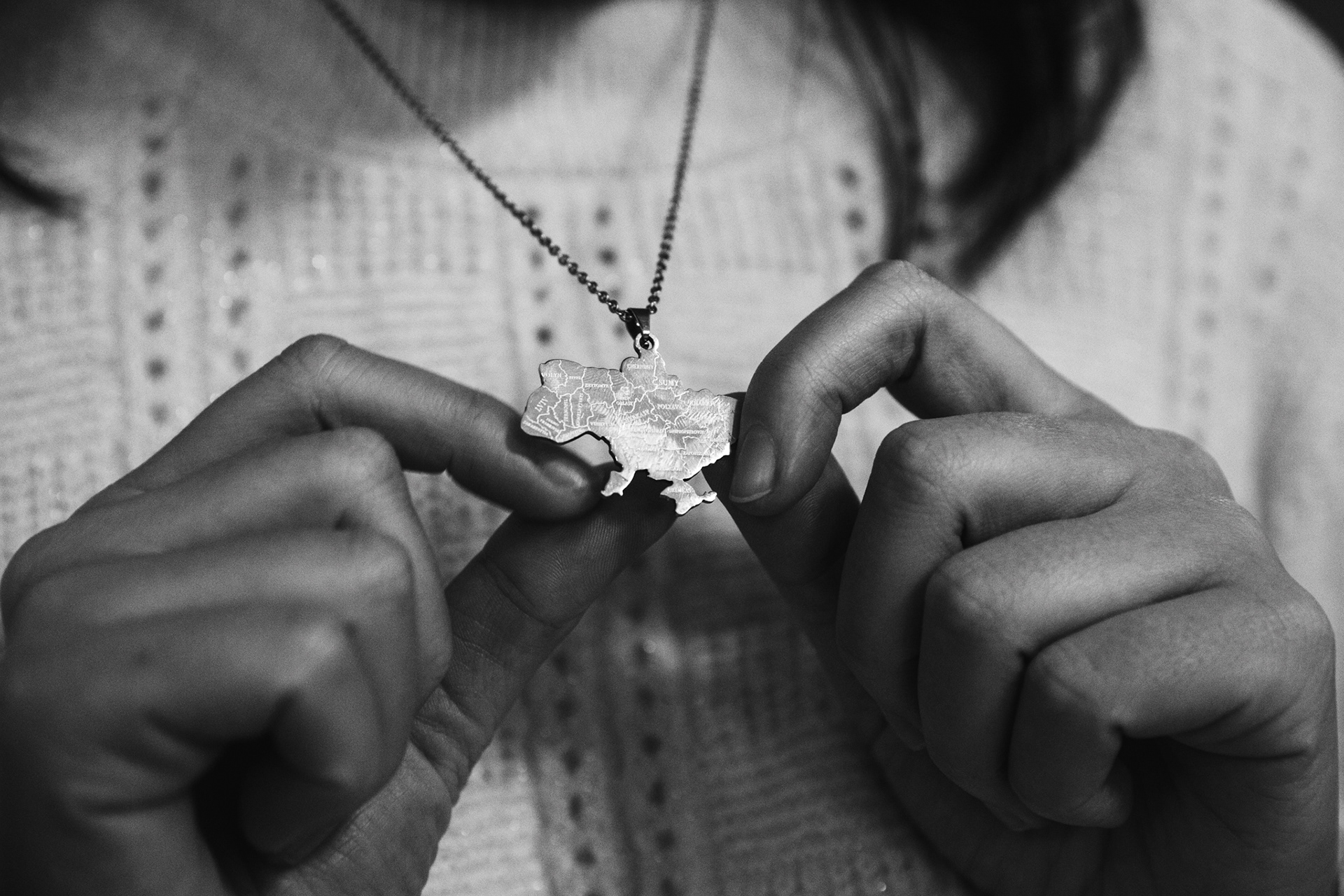
Now they speak once a week. "He’s not very tech-savvy, so he has his own ritual: he goes to 'visit' friends near the local cemetery. As they joke—that’s where the signal is best." Anastasiia keeps her Ukrainian SIM card specifically for these calls.
"He tells me his 'menu' for Saturday: pastries, dumplings with cherries and potatoes—all home-grown from the garden. It’s his way of holding onto life in a town without electricity, gas, or water.
And I am waiting for one special parcel from him—an album of my childhood photographs that miraculously survived."
Chess as a Survival Strategy
Moving to Britain was another move for Anastasiia in a complex match. Her husband is an International Grandmaster, and it was the chess community that helped the family find sponsors.
But for Anastasiia herself, chess is more than just her husband’s profession. It is her way of thinking. "Chess is the red thread running through my life. It’s how I met my husband. Our son plays too. It’s a game that taught me how to calculate the architecture of life."
Upon arriving in England, she made a principled decision.
"I didn’t go into service work. I told myself: 'I have to beat this system by its own rules.'"
Chess logic helped her pass GCSEs in English and Maths alongside 16-year-old teenagers.
"Before I say anything in the office, I calculate the structure of the sentence like a move with a piece. I have to know all the details in advance so that circumstances don't checkmate me."
Anastasiia holds a Master’s in Accounting and Auditing. She requalified and now works as an accounts assistant for an English company.
For her, this is a victory of intellect over chaos.
Resilience: Ticking the Achievement Calendar
Resilience is not a theory for Anastasiia.
It is a life where:
her child begins having stress-induced epileptic seizures;
relatives and friends are killed by drones in the occupied territories;
her childhood home disappears under water.
"I am learning to accept everything the world gives me."
At a professional conference where the theme was Resilience, she said: "What can I tell you about resilience? It is my life."
She has lost the classic sense of happiness but has found a system of small steps.
Minus 8 kilograms—a win.
A passed exam—a win.
A job in an English company—a win.
"It’s a discipline that stops you from 'eating your emotions.' I’ve learned to balance: reading news from Ukraine in the morning, and being an effective professional during the day."
She is proud of her son, who at 15 feels like an equal among the English, and of her own ability to "gracefully forget" the bad things. She only collects results.

A Rainbow as the Final Chord
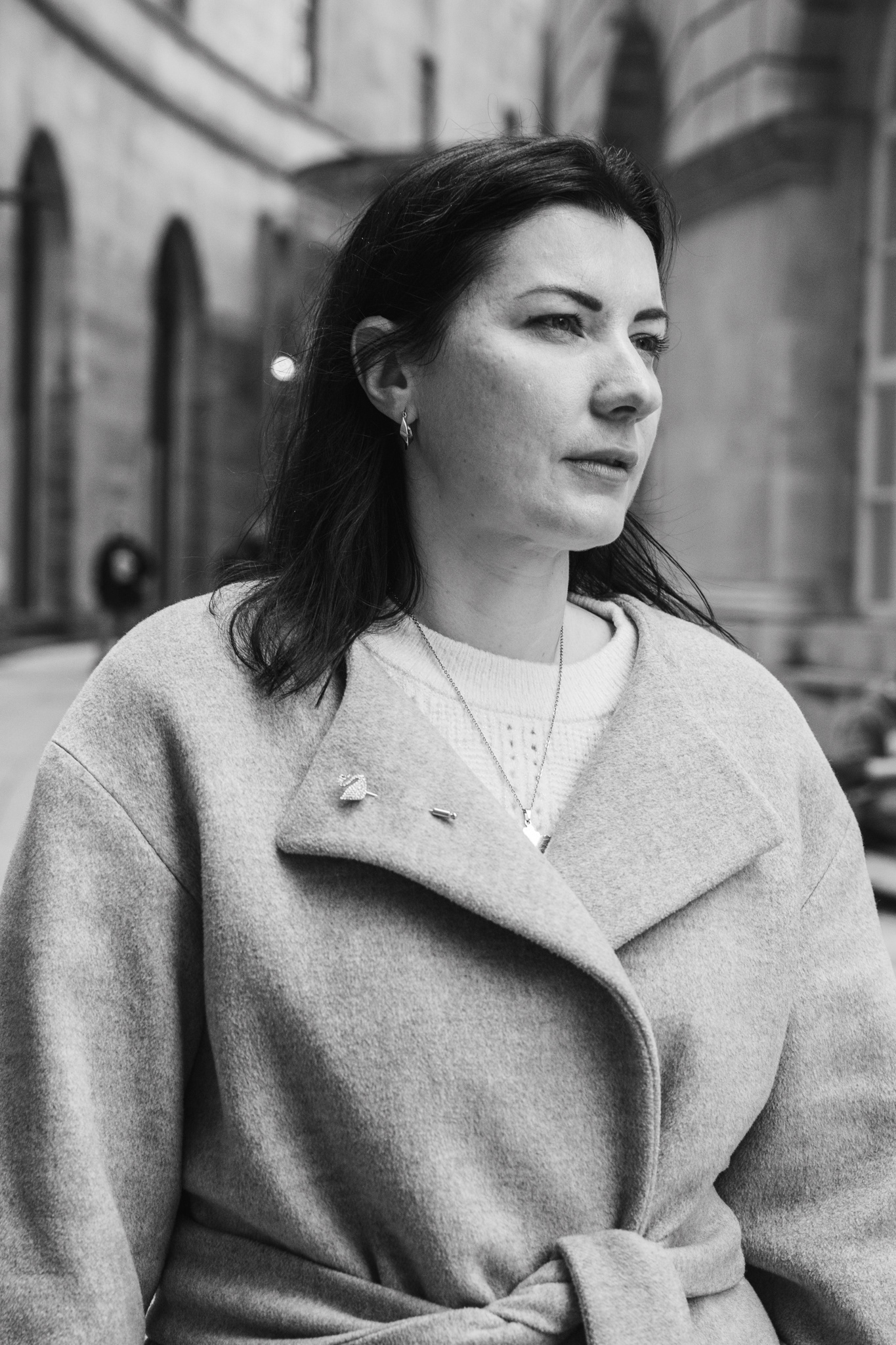
Anastasiia Shkuro is a woman who looks at the world through the prism of opportunities, not losses. Her resilience lies in her ability to find meaning where others see ruins. "I was driving here today and feeling low. And then I saw a rainbow over the motorway. To me, it’s a sign that I’m on the right path.
There is no past. There is no future. There is only the point where you are now.
I make decisions at this point and I take responsibility for them.
My match continues. And I have no intention of leaving the board."