The Voice That Saved a Life
For Maryna, Kharkiv had always been a city of momentum and grand plans. Working for a successful company, she was accustomed to rational thinking. However, the evening of 23 February 2022 defied all logic. Despite the unsettling news she and her colleagues were swapping, Maryna refused to believe a full-scale war was possible. But her subconscious—or perhaps something more—already knew.
"When I went to bed that evening, I was living alone. My bedroom was right by the window, with the bed pressed up against the glass. Suddenly, a voice inside said: 'Don’t sleep by the window, there’s going to be a war.' This was on the night of the 23rd. But it wasn’t my voice. You know how it is when you're lost in thought—you recognise the words as your own. This was a phrase thrown in from the outside. I thought to myself, 'Goodness, what nonsense, I’ve just been talking too much politics with my colleagues.' But I moved my bed anyway."
At four in the morning, reality crashed into the room with a series of dull thuds. The shelling of Kharkiv had begun. Maryna went to the window and saw a scene forever seared into her memory: woods, smoke, and a drone hanging motionless over the horizon.
"I could see so much smog; everything was on fire. There was a military station nearby where young soldiers trained. It had been blown up. And I saw this drone—small, white. It looked frozen in time. I simply couldn’t believe it; I thought I was in a horror film. I was even terrified to turn on the light. I felt that if I flipped the switch, I’d be killed instantly."
In a state of total shock, Maryna ran into the hallway. She remembers the moment a shell hit right next to her flat. She stood there naked, covering her head with her hands, and in that split second, it wasn't a thought of death that flashed through her mind, but one of human dignity.
"I heard the whistle, and a shell hit our building. I started to crouch, bracing my body. No one had taught me this; it was just an automatic reflex. And my first thought was: 'They’re going to find you dead and naked. How shameful.' I counted to three and waited for the explosion. My muscles tensed so hard my whole body felt like stone."
The shell hit the neighbouring flat, just two metres from her kitchen. It didn't explode. It was the first of many miracles she would encounter on her journey.
Six Days in a Trance and the Road to Nowhere
Maryna spent the next six days with her parents just outside Kharkiv. It was a time of total emotional numbness—when the body refuses food and the mind refuses to grasp the scale of the catastrophe.
"For six days, I couldn't eat or drink. My mum tried to give me something, but I just kept being sick. A neighbour brought over a three-litre jar of homemade wine. I drank it by the glassful and didn’t get tipsy. The alcohol simply didn't work because my body was so tightly gripped by stress. I spent the whole time lying in the hallway because I was in a blind panic about windows."
The evacuation was an ordeal. Kharkiv station had become a nexus of human agony and chaos. Maryna recalls how she, her mother, and their little Yorkshire Terrier tried to get onto any train they could find.
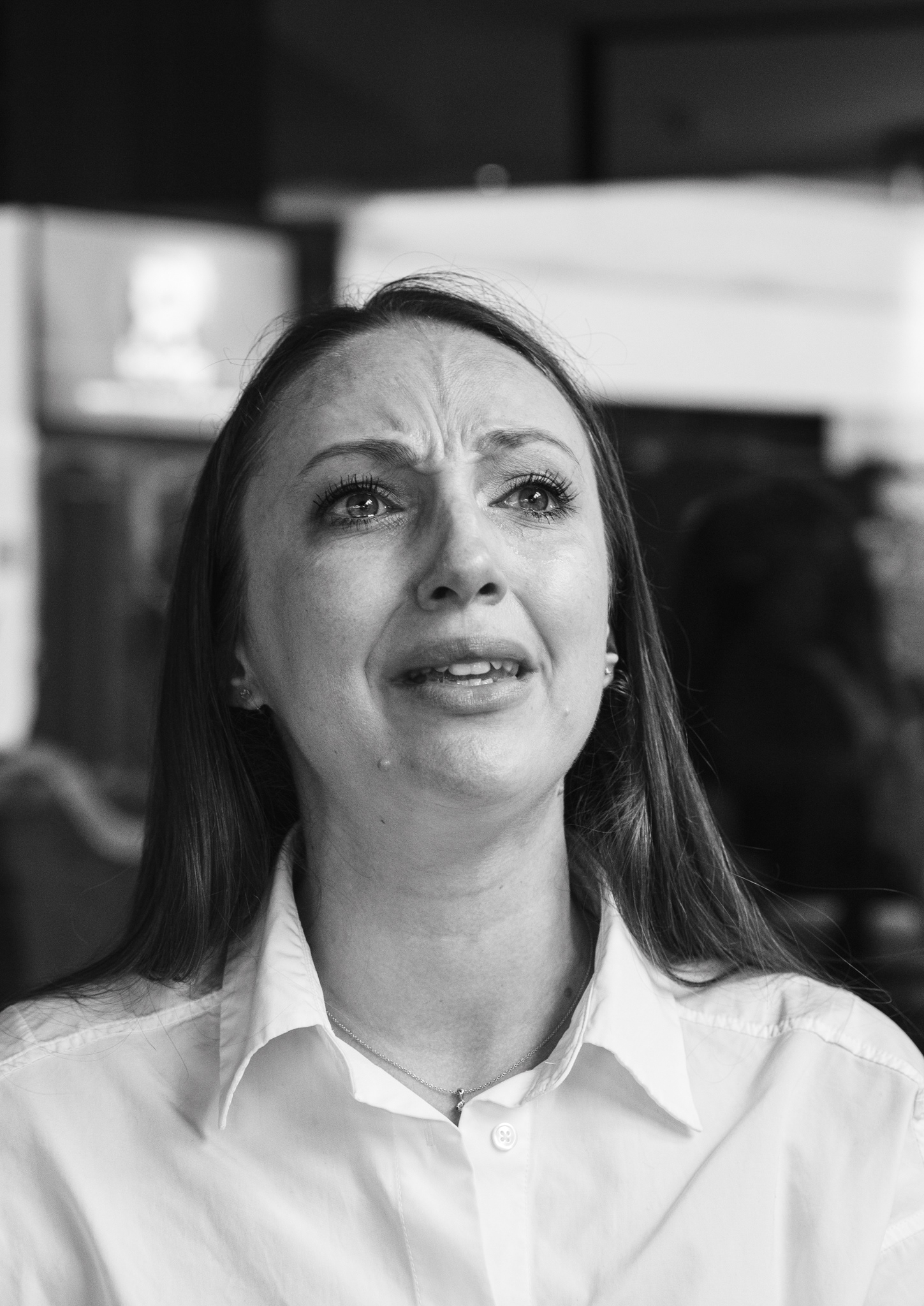
"We stood there from eight in the morning until four in the afternoon. The crowd was so thick it was impossible to breathe. Foreign students, men—everyone was pushing, breaking the queues. My mum and the dog had managed to get on, but I was left on the platform. The conductor was shouting that there were no spaces left. I just started sobbing out loud. Then, a man scooped me up and literally shoved me into the vestibule. We travelled to Ivano-Frankivsk next to the toilet, sitting on our bags."
After Ukraine came Athens. Then Qatar, where her sister lives. But neither the scorching sun nor the safety of the Middle East brought peace. Maryna realised her place was in Europe, where she could fulfil her potential and be closer to home.
An English Family and the Magic of Suffolk
Great Britain welcomed Maryna not just with rain, but with the incredible warmth of human hearts. Through a sponsorship scheme, she ended up with an English family in the town of Ware (near London). These were people who opened both their home and their hearts to her.
"I arrived with one small suitcase - 19 kilograms. That was all that remained of my past life. My hosts left the keys under the mat because they were away. There was a note: 'Maryna, come in, there’s wine and food, make yourself at home.' They even tried to give me the money the government paid them for hosting me. They said, 'We don’t need this, we just want to help.'"
It was during this period that Maryna made a bold decision - to enrol for an MBA in London. It was her survival strategy through self-development.
"Studying was my way of integrating. Three times a week: evening lectures and Saturdays. It was tough—writing a dissertation in English while sirens were still ringing in my head. But I passed with the highest marks. I became obsessed with it. I, who had always loathed finance and numbers, suddenly saw the logic in them. They showed me that finance isn't boring; it’s about scale and strategy."
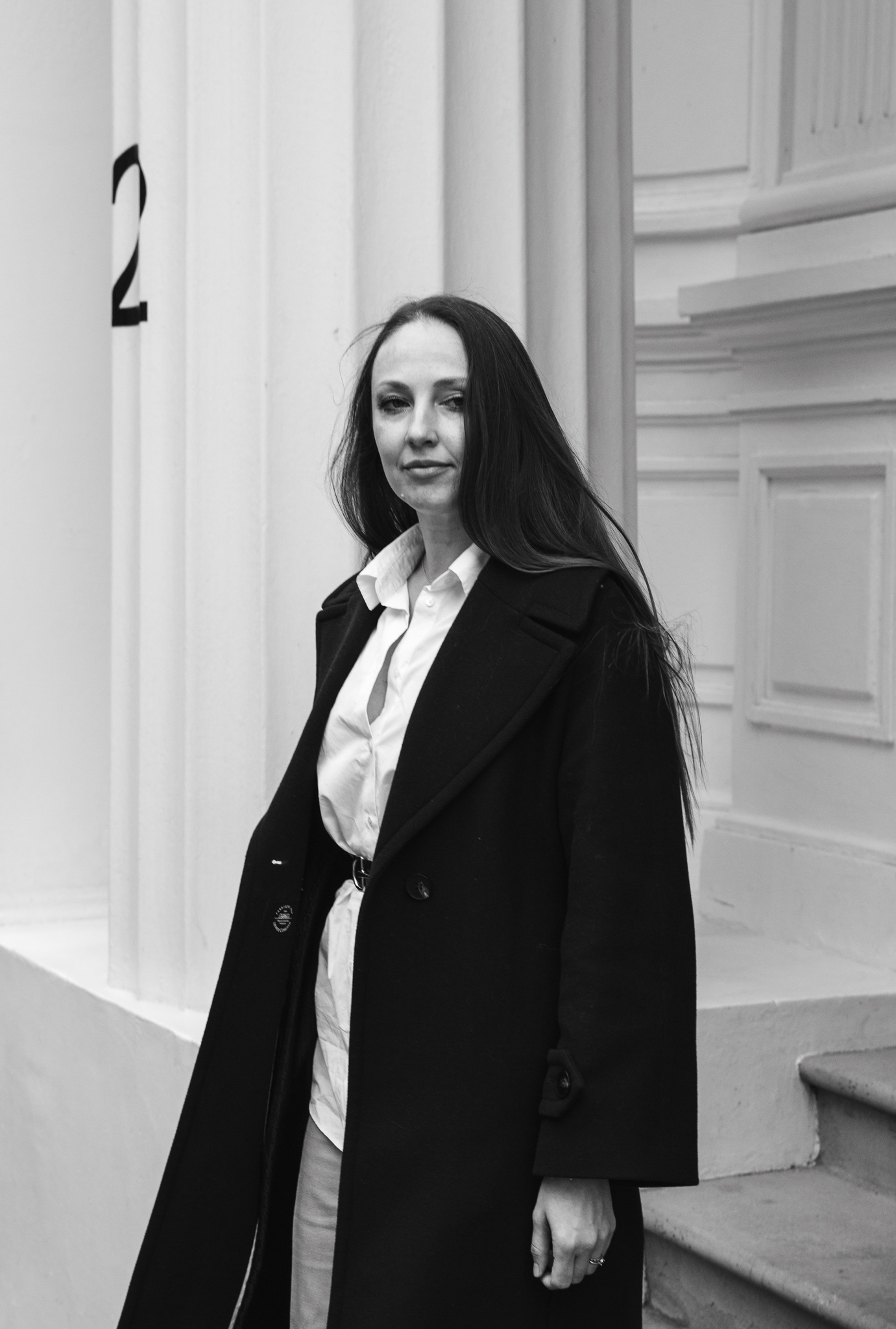
Andrew: A Meeting of Two Souls
When Maryna moved in with her friend, a 90-year-old English aristocrat named Janie, she met Andrew. Janie, who had once produced films for the BBC, arranged a proper "inspection."
"Janie said, 'Bring him over, we’ll take a look at him.' She and her friend from Oxford, both 90, hosted a lunch. They liked Andrew immediately. He’s an Englishman, 'old school', a vicar’s son. We’re like Siamese twins. We see the world the same way; we love the same traditional things. He became my rock in everything."
Andrew didn't just support Maryna—he became her partner in processing the trauma. When she finished all her exams and the post-traumatic stress finally caught up with her, he was right there.
"After a year at a breakneck pace, I just 'shut down'. I couldn't get out of bed, I couldn't clean, even taking a shower was hard. It was the price for two years of living on adrenaline. And Andrew took everything upon himself. He cooked, he cleaned, and he kept saying, 'You’re doing great, you’ll get through this.' His parents lit a candle in church every day for Ukraine and for me. That kind of support truly brought me back to life."
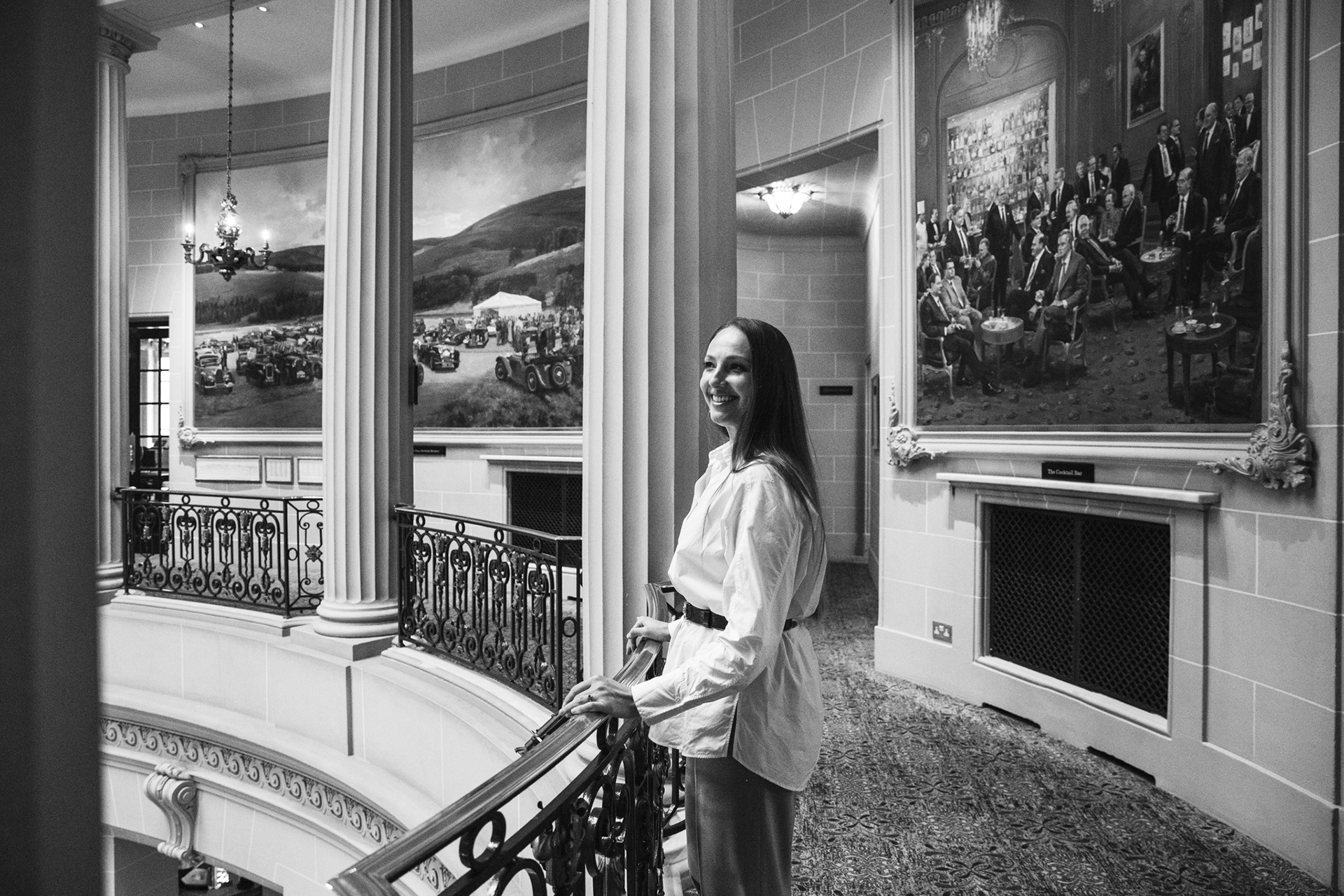
A Book of Two Wars
Today, Maryna and Andrew are writing a book. It is a documentary narrative connecting Maryna’s story with that of her grandmother, who in 1943 was also forcibly taken from Derhachi (Kharkiv region) to Germany.
"My grandmother was 18 when she was loaded into wagons like cattle. She worked at a Junkers factory, making aircraft parts. She saw Italians being killed as they collapsed from exhaustion. She survived, walked all the way back home, and met my grandfather. He drove a 'Katyusha' rocket launcher and survived the Siege of Leningrad. He said he used to dream of my grandmother at the front. We are writing about this because our destinies are one circle. Two women, two wars, one strength."
The Body Remembers
Maryna has found a new home, earned her MBA, has a successful career, and is in love. But the war remains in her tissues. She still feels Kharkiv from a distance.
"I don't read the news constantly, but I feel the attacks. If I wake up in the night with a wild sense of aggression or anxiety, I know Kharkiv is being shelled. I call my mum—and yes, they are in the cellar. My body is my radar. But now, at least, I can sleep. Andrew takes my hand and says, 'You’re home, everything’s alright.' And I believe him."
Maryna dreams that after the victory, she and Andrew will have a house in Ukraine. She wants to grow flowers on her native soil, and he wants to learn Ukrainian. Her story isn't about escape, but about the ability to grow anew where you are watered with love.